

A series centered on the intersection of poetry and psychoanalysis can explore how both disciplines utilise language to navigate the complexities of human experience.
Freud remarked, “Poets are masters of us ordinary men, in knowledge of the mind, because they drink at streams which we have not yet made accessible to science.”
These events will be recorded and shared for 30 days after the event.
Please click here to see the papers given at the first event on 7th June.
Upcoming Poetic Mind Seminars
Monday 14th September 2026
8-9.30pm
Online only
Bridging Time 1944-2024
Letters to My Father
By Patricia Townsend
Discussant David Black
Chair David Morgan
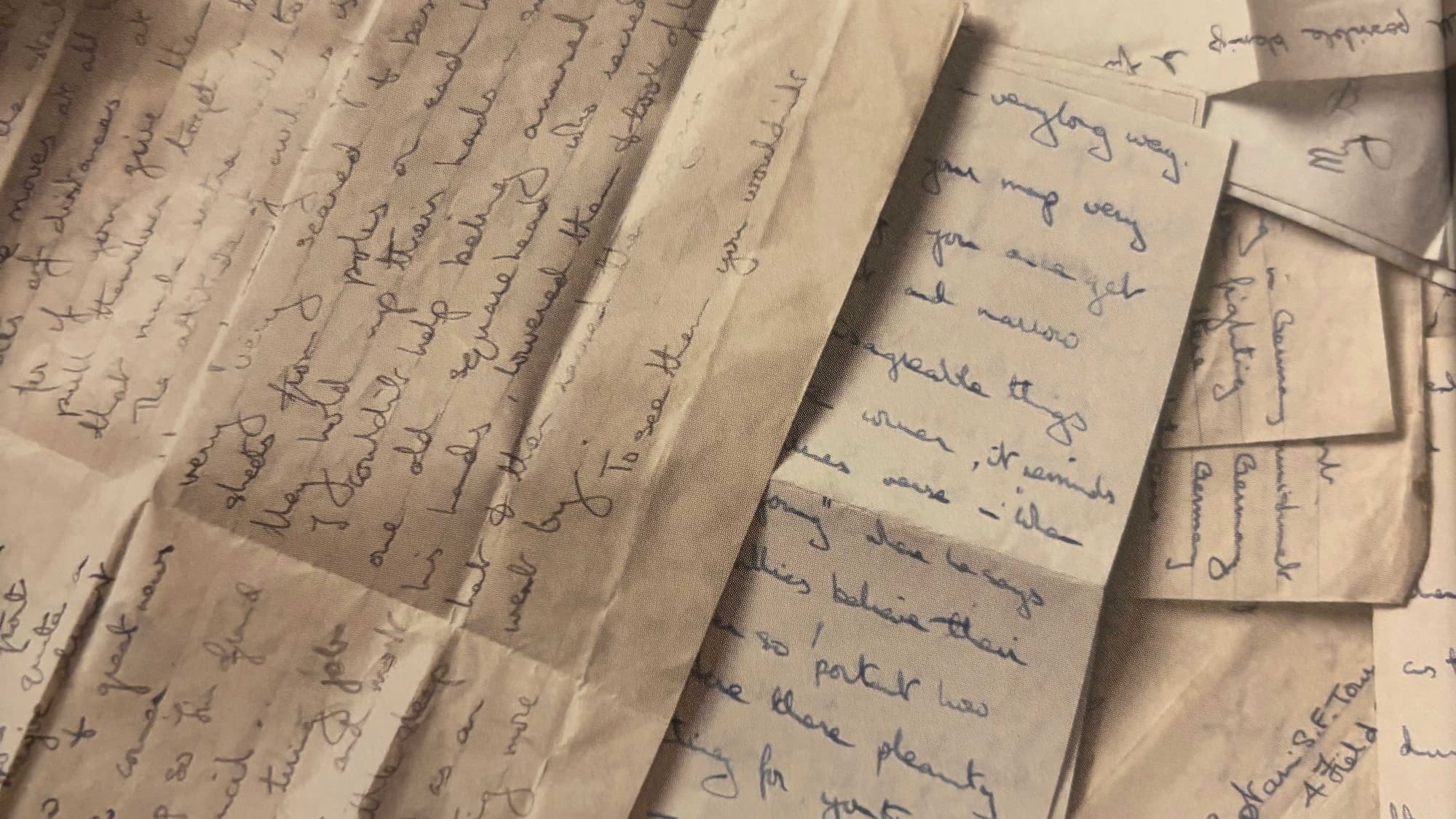
This book is an artist-writer’s epistolary memoir, built from her father’s Second World War letters.
Patricia Townsend is a London-based artist and psychoanalytic psychotherapist who inherited a bundle of fifty letters written by her father, Sam Townsend of the Royal Engineers, beginning in July 1944. Through researching his wartime experiences and retracing the route taken by his unit, she created a dialogue with the past by responding to his letters in the form of sonnets. From this process emerged both a book and an exhibition that weave together historical record, poetic reflection, and artistic exploration.
Biographies
Patricia Townsend is a writer and visual artist working with photography, moving image, installation, and poetry. Her work is held in the collections of the British Academy and Abbot Hall Gallery. She holds a PhD from the Slade School of Fine Art. Under the name Patrica Marsden she also practises as a psychoanalytic psychotherapist.
David Black is a psychoanalyst and poet. He is author of six collections of poetry and Emergency Kit (Faber), Wild Reckoning(Calouste Gulbenkian), Twentieth Century Scottish Poetry (Faber) and many other anthologies. As a psychoanalyst he has published many professional papers, an edited volume on psychoanalysis and religion, and a collection of essays relating to values and science.
David Morgan is co-chair with Louise Hayman of Poetic Mind. Psychoanalyst and Fellow of BPAS. Training Analyst BPA.
Previous Poetic Mind Seminars
Saturday 27th June 2026 10am – 12pm
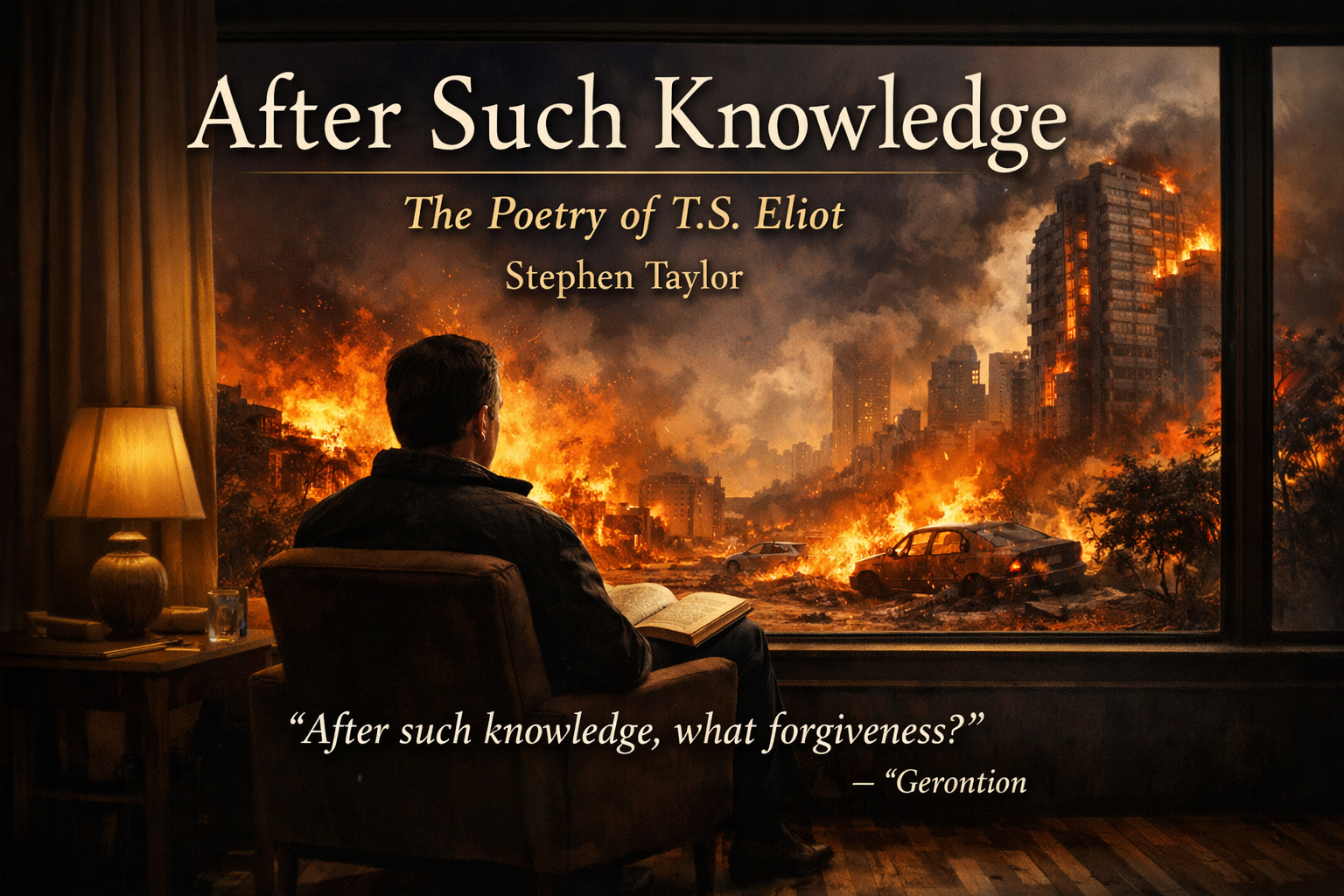
“After Such Knowledge The Poetry of T.S. Eliot”
Stephen Taylor
Louise Hayman- Chair
Hybrid – In-person and online
89 Prince of Wales Road, NW5 3NT & Online via Zoom
We know what is happening. We have known for decades. And yet we do not act. Why? This paper takes Eliot’s anguished question from Gerontion as its starting point “After such knowledge, what forgiveness?” and turns it
on the defining crisis of our time.
Drawing on the poetry of T.S. Eliot as both diagnostic instrument and moral compass, Stephen Taylor argues that the failure to respond to climate breakdown and social collapse is not primarily a failure of information or political will. It is a failure of narrative specifically, the absence of any credible path to redemption within prevailing environmentalist discourse.
Working at the intersection of epiphenomenalism and evolutionary psychology, Taylor asks what it would take to move from paralysis to action, from knowledge to transformation. Eliot prophet of the waste land, poet of spiritual desolation and tentative renewal turns out to be an unexpectedly illuminating guide.
Stephen Taylor holds degrees in philosophy and psychology and trained as a psychotherapist. He works as a software developer and community organiser in North London, and is a Zen Buddhist and performing poet.
Louise Hayman is a psychoanalyst with the BPA and co-chair of Poetic Mind.
Saturday 31st January 2026 11am – 1pm
What in Me is Dark? Paradise Lost and Psychoanalysis
Prof Orlando Reade
Chair David Howell Morgan
Hybrid – In-person and online
89 Prince of Wales Road, NW5 3NT & Online via Zoom
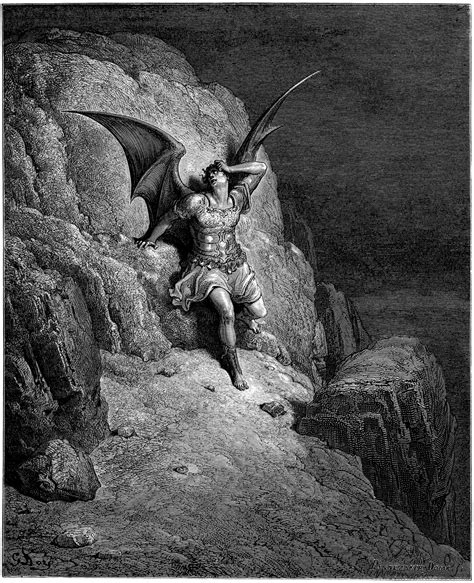
This talk will explore the key psychological insights of John Milton’s Paradise Lost and describe its influence on psychoanalytic thinkers including Sigmund Freud, Carl Jung, and Melanie Klein, as well as the controversial clinical psychologist Jordan Peterson. Traversing the inner landscapes of Satan, Adam, and Eve, it will reveal how Milton’s epic thinks about dreams, envy, temptation, guilt, and reparation.
Orlando Reade is the author of What in Me is Dark: The Revolutionary Life of Paradise Lost (2024). He studied English at Cambridge and Princeton, where he received his PhD in 2020. He writes about contemporary culture and politics for publications including The Financial Times, The New Statesman, and The Nation. He is currently Assistant Professor of English at Northeastern University London.
Saturday 19th July 11am – 1pm
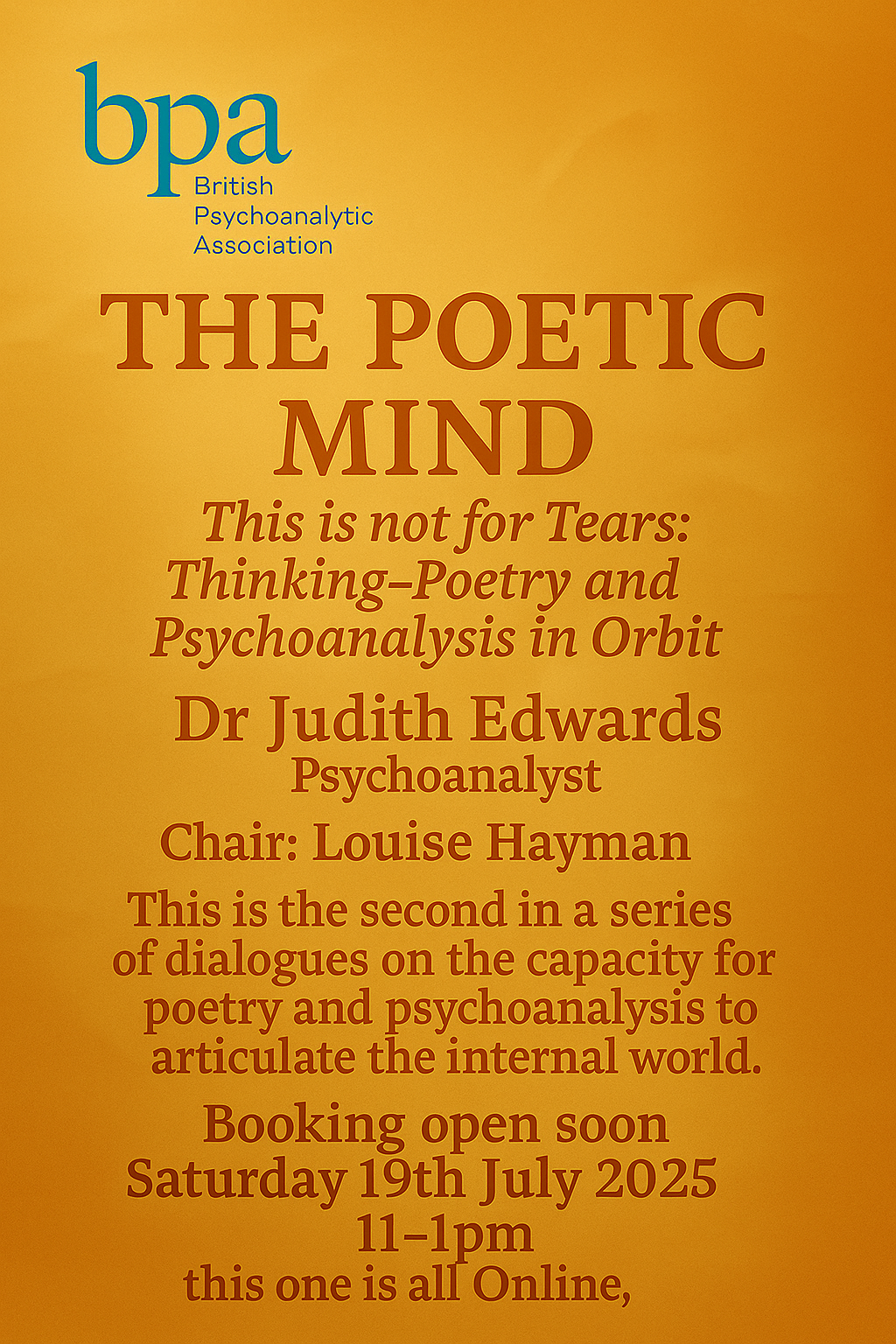
‘This is not for Tears: Thinking’‐Poetry and Psychoanalysis in Orbit
Dr Judith Edwards, Psychoanalyst
Chair Louise Hayman, Psychoanalyst
Discussant David Morgan, Psychoanalyst
This is the second in a series of dialogues on the capacity for poetry and psychoanalysis to articulate the internal world.
Online, via Zoom only
Abstract
This paper has been five years in the making, since I have run a series of seminars about poetry and psychoanalysis at the Tavistock Clinic, for non-clinical students. The title comes from a poem by John Berryman, (1914-72) Dream Song 29 (1964 p.77), and it sums up how in this seminar we have tried both to feel what we feel in an authentic way when reading a poem, and think about the links it may have with the central core of the students’ study, which is psychoanalysis.
Are the two disciplines in any way complementary? Can unconscious phantasy be tapped into via the medium of poetry? In this paper I hope to show that while there are profound differences between poetry and psychoanalysis there are also similarities, as the work with students has highlighted; I will also include three brief clinical vignettes.
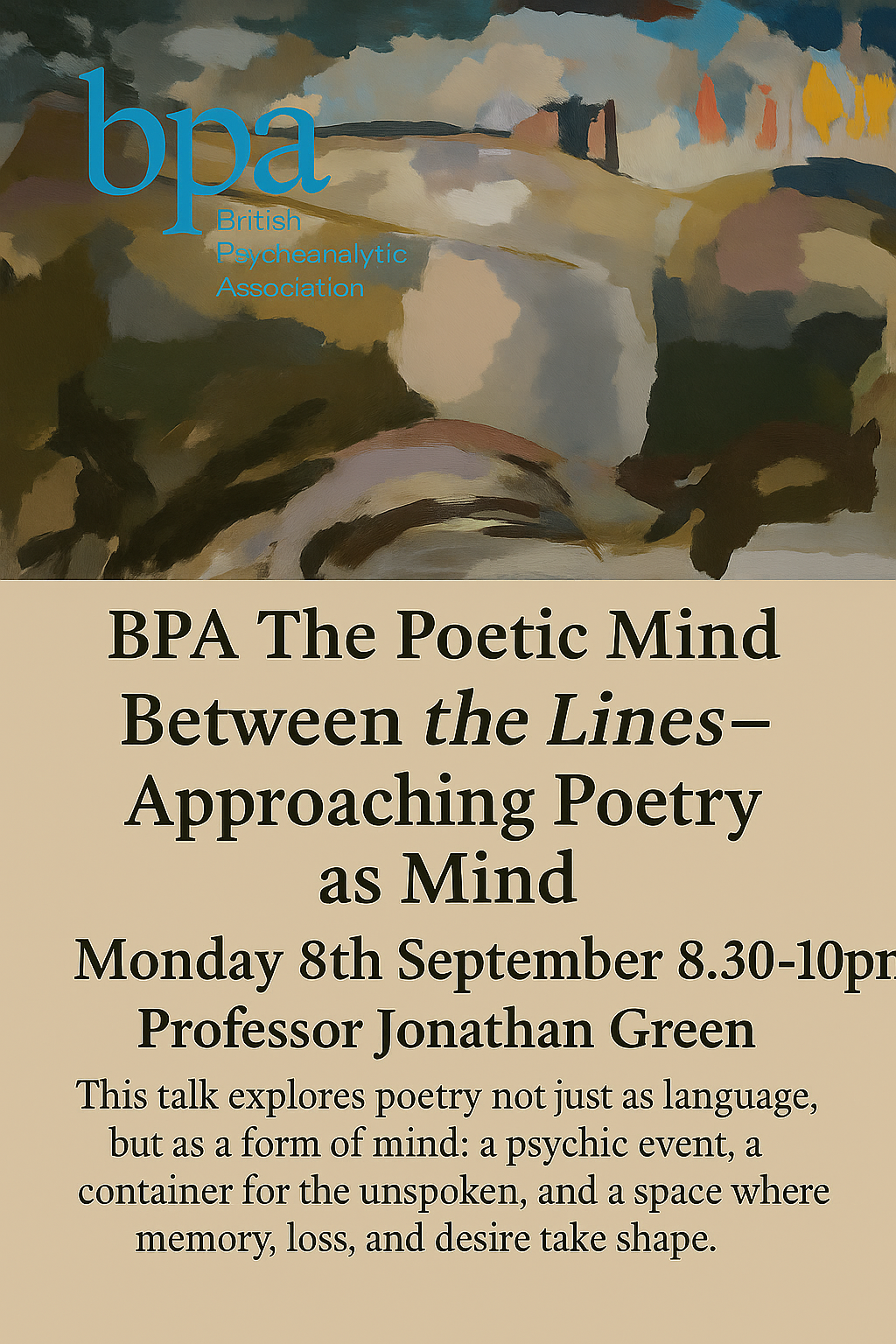
Monday 8th September 8.30pm – 10pm
Between the Lines – Approaching Poetry as Mind
Professor Jonathan Green
Hybrid – In-person and online
89 Prince of Wales Road, NW5 3NT & Online via Zoom
Approaching poetry’s mind invites readers into a fertile space where poetry and psychological thinking meet – not as disciplines but as ways of thinking, feeling, and being. Talk and performed poetry will illustrate an approach to poetry, not merely as language but as a form of mind: an embodied container for the unspoken and a symbolic space in which absence memory loss and desire are given shape. Drawing on clinical insight literary sensitivity and philosophical depth, between the lines will offer a richly textured meditation on poetic communication. For therapist poets and all those attuned to the inner life of language, this is a presentation about how poems can think.
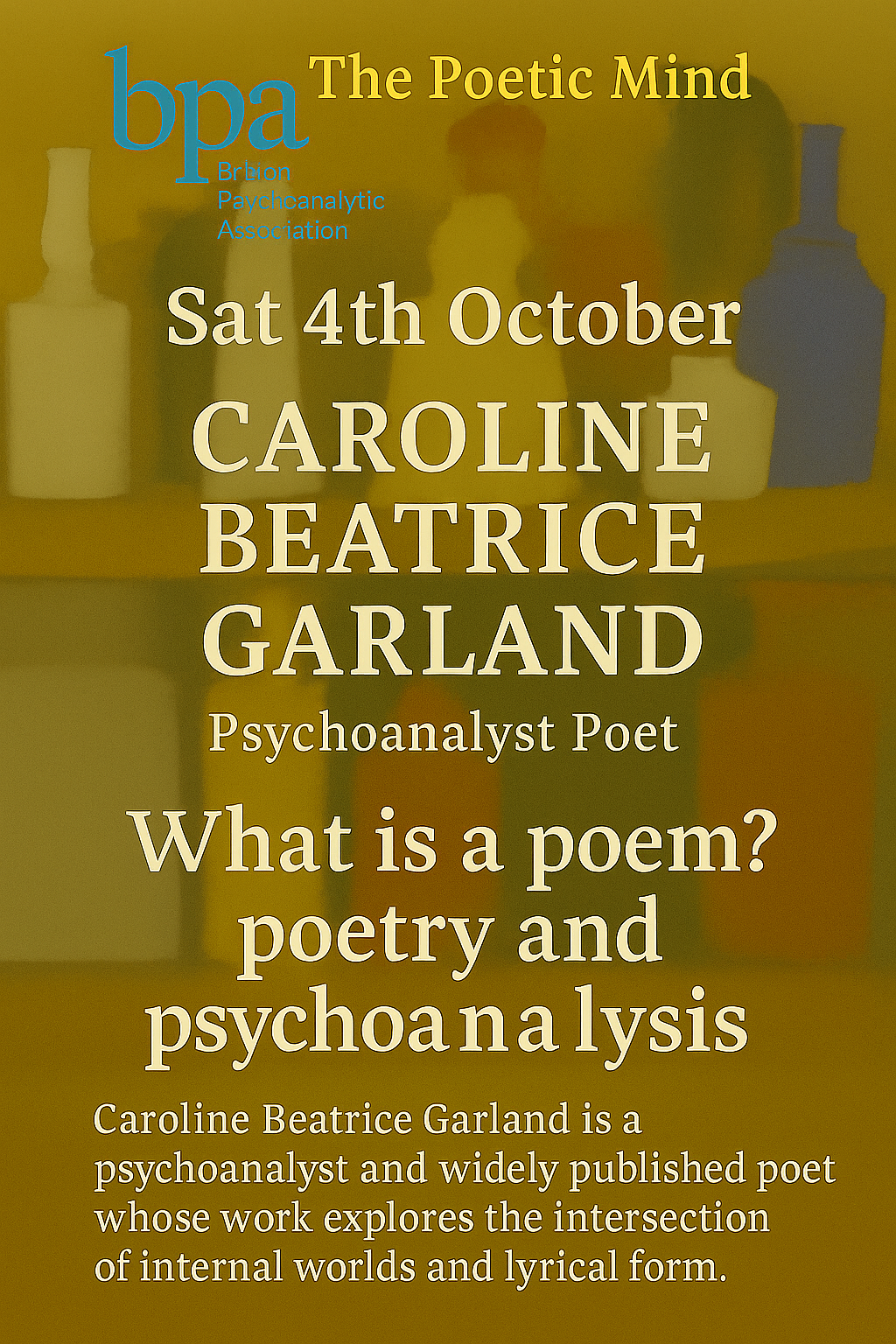
Saturday 4th October 11am – 1pm
What is a poem? Poetry and psychoanalysis.
Chair: Louise Hayman
Hybrid – In-person and online
89 Prince of Wales Road, NW5 3NT & Online via Zoom
Caroline Beatrice Garland is a psychoanalyst and widely published poet whose work explores the intersection of internal worlds and lyrical form.
Poetry and psychoanalysis have much in common: both incorporate many levels and depths of experience, and both need time and thoughtful interpretation if they are to be understood and appreciated. My own need to write is in part because I have spent a lot of time listening to, and trying to understand, other people’s worlds. Writing poems exists in parallel to that: it’s a way of talking about the private way in which I see, am touched by, and try to grasp and respond to my own world, and the people that inhabit it.
Saturday 1st November 11am – 1pm
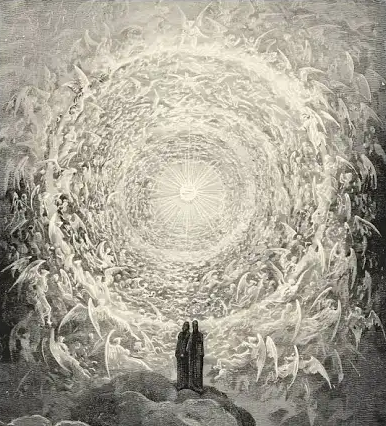
“Is there a place for Paradise in the modern world? Reflections on Dante’s Paradiso”
Giovanna Di Ceglie
Hybrid – In-person and online
89 Prince of Wales Road, NW5 3NT & Online via Zoom
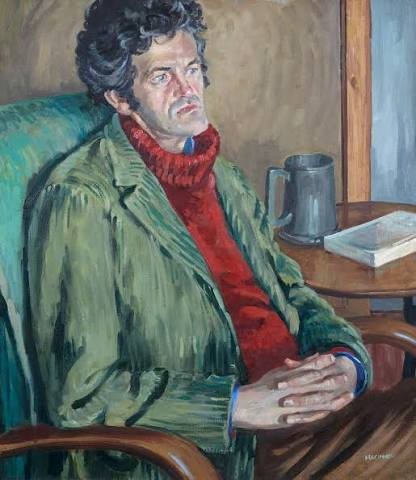
(Painting by Ian Macinnes)
Saturday 13th December 10am – 12pm
Carve the Runes, then be Content with Silence:
George Mackay Brown and the Psychoanalytic Imagination
David Howell Morgan
Discussant Raine Geoghegan, Poet, Writer
Chair: Catherine McKisack
“This is the use of poetry: to enable us to come to terms with those powers that cannot be denied, that surround us wherever we turn. We can actually hold a dialogue with them, through the medium of poetry… it may be in the end that we shall find the courage to turn and face them.”
Online, via Zoom and In-Person at 89 Prince of wales Road, NW5 3NT
“Carve the runes / then be content with silence”
In these two spare lines, George Mackay Brown captures at least for me something of the paradox at the heart of both poetry and psychoanalysis. Words must be made, cut, inscribed, yet words must also be left behind and discarded so that silence may do its work. Brown’s poetics, steeped in the sea-washed landscapes of Orkney and the cadences of Norse saga and Catholic liturgy, does not merely describe reality but contains it, holding within its lines the elemental forces of life and death, community and solitude, transience and eternity.
For psychoanalysis and for me the parallel is clear, an analytic hour requires inscription, interpretation, naming, the putting into words of that which would otherwise remain mute. The analytic process equally requires silence and the space in which words may reverberate, be absorbed, and transformed into psychic substance.
Brown’s injunction to carve and then be silent can serve as a metaphor for the psychoanalytic task, to say enough, but not too much; to speak so that the unspoken may live on.
George Mackay Brown (1921–1996), the poet of Orkney, devoted his life to rendering into language the enduring forces that surrounded him, the sea, the land, the lives of fishermen and crofters, the weight of history, and the inevitability of death. His was not a confessional lyricism but a poetry of witness, ritual, and endurance.
David Howell Morgan is a psychoanalyst. Training analyst for the BPA and fellow of the BPAS. He is organiser of the Poetic Mind seminars with Louise Hayman and Catherine McKisack. He is author of several books and one based on these seminars is in progress. He met and heard George Mackay Brown on one occasion at an Edinburgh reading at the age of 20 and has loved his work ever since.
Raine Geoghegan, Poet, Writer, Performer, and Founder of Writing from the Heart, a creative writing and healing programme. She has a BA Honours Degree in Theatre Practice and English Literature from Roehampton University, a Master’s Degree in Creative Writing from the University of Chichester, a Diploma in Personal Development, Sexuality Training and Equal Opportunities for Women from Redwood Women’s Training Association, a Diploma in Adult Learning and has received medals and awards for dance.