In 2000, Dan Twomey had stood as Chair of the Psychoanalytic Section, with the aim of exploring the possibility of membership of the IPA; Helen Alfillé and Sharon Raeburn were already closely involved.
From 2000-2003 there were meetings in the BAP, with the IPA and with the British Society, all of which had a positive outcome. And then once we entered into the application process with the IPA, beginning in 2003 and with the first Site Visit in 2004, our move from Site Visit Committee to Liaison Committee, from Direct Membership to Component Society status happened in the shortest possible time. 13 people became Direct Members of the IPA in 2005, the BPA became an Interim Provisional Society in January 2006, a Provisional Society in 2007, a Component Society in 2009, with ratification by the IPA Board in January 2010.
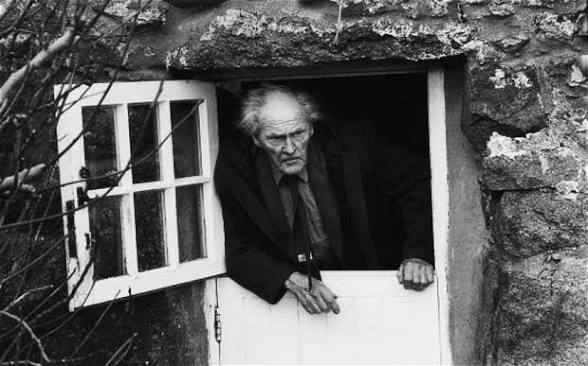
Sadly Dan Twomey did not live to see our success as he died in January 2004. Helen Alfillé and Sharon Raeburn took over, having already taken on much of the work during Dan’s illness. We will never forget Dan for initiating this move and so facilitating the extraordinary development of a new IPA Society in the UK.
I think that very few really believed this immense change would be possible, either in terms of psychoanalysis in the UK or internationally. We had always to hold this goal in mind and were able to do so with the facilitation, support and encouragement of the IPA and the BAP. We could achieve our objective partly because of our strong foundations from our original BAP training, because of the personal analysis, supervision and teaching that we received from IPA Training Analysts and psychoanalysts, a prerequisite for application. We also had some years of discussions with the British Society, who supported our application. The IPA and the British Society were very clear that any new Society to be developed in a country where there was an existing Society had to provide a training with the same model, that is, in our case in the UK, the Eitingon model of training. The BPA had to offer 4-5 times a week training. Dialogue with the British Society continues, although with the focus now on issues of common concern.
In order to have our new Society we had to do more than fulfil these IPA requirements, we had to make them our own. It was of course exciting, but never plain sailing for any of us. I am proud of what has been achieved due to the hard and tireless work of a small group initially, now extended to a full Board with all its committees and of course its members and candidates.
We have a thriving psychoanalytic Society, with training in its third year, which I have no doubt will have its fourth year in the autumn. We have the same number of candidates as many old-established Societies in Europe.
We have introduced regular clinical presentations and presenting work to colleagues, which has become an important part of our ethos. Of course we all did this during our training and perhaps in peer groups, but not in this way, to the whole Society. Unusually, we are able to do the unthinkable, having different theoretical orientations, and benefiting from these divergent ways of thinking, whilst still respecting one another. This is not a straightforward thing to do and we do not come from any such tradition but we have managed it and I have no doubt that it will continue and flourish, simply because we are prepared to think and to learn from one another. My sense is that this capacity has begun to increase, especially recently, as we try not so much to supervise one another but to hold a dialogue about the work.
We have a scientific life which continues to develop and we have colleagues who write papers and reviews and edit books. All of this is essential if we are to grow and contribute and take our proper place in Europe and internationally. This we are now doing and are respected for what we have achieved thus far. We have members on IPA Committees, others who attend European symposia, European and International conferences, and, of central importance, Astra Temko has enthusiastically assumed her role as IPSO Representative.
IPA Societies worldwide are concerned about the decline in psychoanalysis. My own feeling is that we have to take care not to change or diminish our standards for possible political expediency, in order to encourage candidates to train or indeed to tackle further rungs on the training ladder. We seem at the moment to have an advantage, in that we are new and have managed to achieve a training with high standards, one that does fulfil IPA requirements, but with perhaps a more open approach. We have benefited and learned much from the British Society and are able to be independent and do some things differently, without a decline in standards.
Outreach has a seminal role to play in encouraging interest in psychoanalysis and particularly in encouraging younger people starting on their journey. I believe it is one of our most important committees. The BAP/BPA Introductory course run by BPA Members is also significant and I would think of it as part of Outreach, on a par with the cinema screening and discussion recently organised by Joan Thompson, and the other activities of the BPA’s Outreach Committee.
The IPA regards Outreach as one of its crucial tasks. At a time when psychoanalysis is diminishing the world over, we as a Society, need to continue to put our heads together to think of ways in which we can encourage a more widespread and early interest in psychoanalysis in those who might wish eventually to train as psychoanalysts. We all need to seriously consider ways in which the BPA can be strengthened, be even more prominent and a desirable place to train. Our new Advanced Training Scheme has already had a number of enquiries, and this is something we need to foster.
I would urge you to read some excellent papers in the June 2012 IPA Electronic Newsletter. These papers and responses by senior analysts comment on the important issues with which we are all grappling, such as the ageing population of psychoanalysts, Outreach and the part it needs to play in Component Societies, as well as the importance of a psychoanalytic identity and the transmission of psychoanalysis. All of them seem to be making a plea that reducing standards does psychoanalysis no favours. Becoming a psychoanalyst is a slow process, as is developing a psychoanalytic identity. We need to believe in what we do, what our thorough training enables us to gain, experience and internalise, in order that we can convey this to prospective patients or candidates.
I have been privileged to share with others in this historic development in psychoanalysis in this country, and thus in the world of psychoanalysis. It is both an honour and a pleasure to have been involved in creating this new and thriving IPA Society. I believe the BPA is in good shape and will continue its work of consolidation and development. We should always bear in mind what has already been achieved, an IPA Society following the Eitingon model, respected for being the unique solidly psychoanalytic Society that we are.
We cannot of course rest on our laurels, we have to keep going and growing and thinking. The BPA cannot, so to speak, be built in a day. We all need to go on considering, whilst maintaining standards, ways to not only keep psychoanalysis and our clinical work alive, but to stimulate and enrich each other and ourselves, and hold onto this most extraordinary of professions, in which we are all privileged to be involved.
About the author
Sharon Raeburn is a psychoanalyst and a member of the BPA and IPA.